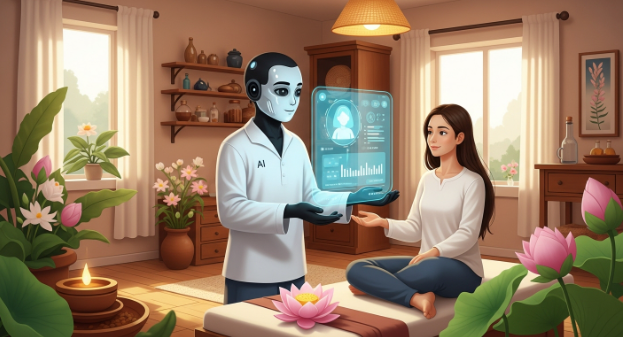
Topic: Balancing Bytes and Doshas: Integrating Ayurveda into Digital Health Experiences
Introduction:
In the digital health age, artificial intelligence (AI) is reshaping the way patients receive medical information. From symptom checkers to lifestyle advice, AI tools are increasingly becoming the first point of contact for people seeking healthcare. Yet, while AI can process data and provide insights quickly, it often lacks a crucial element – empathy. This is where human-centered design principles, combined with ancient healing systems like Ayurveda and modern evidence-based practices, come in to create content that truly resonates with patients.
Writing patient-focused AI content isn’t just about accuracy; It’s about connection. Using tools like The Humanize AI Pro and Humanizer, creators can bridge the emotional gap between automated health communication and real human care.
Understanding empathy in health content
Empathy in writing goes beyond a friendly tone or soft language – it is the ability to understand the reader’s psyche, fears and needs. In healthcare, this becomes even more important as patients often seek information in vulnerable moments.
For example, a patient searching for natural remedies for insomnia doesn’t just want a list of herbs—they want reassurance that their condition is manageable and that holistic treatment is possible. This is where empathy-driven writing plays an important role.
By integrating humanized AI Pro into your workflow, you can guide AI-generated text to adopt a compassionate tone, maintain factual integrity and reflect cultural sensitivity – this is especially relevant when referencing systems like Ayurveda, which deeply value emotional and physical balance.
Ayurveda and modern evidence: a harmonious blend
Ayurveda, a 5,000-year-old Indian medical system, emphasizes personal care, prevention, and balance between mind, body, and spirit. While modern medicine focuses heavily on data and evidence, Ayurveda focuses on prakriti (body structure), lifestyle adaptation and emotional well-being.
By combining Ayurvedic philosophy with scientific evidence, content writers and AI developers can provide the best of both worlds – traditional knowledge validated by modern research.
For example:
• Ayurvedic perspective: Stress is seen as an imbalance in Vata dosha (air and space elements).
• Scientific evidence: Chronic stress triggers cortisol spikes, leading to fatigue, anxiety and sleep disturbances.
By explaining these two perspectives together, the content becomes both educational and empathetic – respecting cultural diversity while strengthening scientific credibility.
Using AI Responsible in patient communication
AI can easily fall into a mechanical rut – burdening readers with medical jargon or generalized statements. That’s why content creators must guide AI systems to write with compassion and nuance.
Here’s how tools like Humanize AI Pro and Humanizer can make a difference:
1. Tone Calibration: These tools automatically fine-tune the tone, ensuring AI-generated content sounds cool, caring and helpful, rather than cold or overly technical.
2. Cultural adaptation: They recognize linguistic nuances, so that Ayurveda-related terms such as dosha, dinacharya or sattva can be explained in a way that global readers can understand.
3. Emotion Mapping: They add emotional resonance to sentences by softening sentences like “Symptoms may worsen” to “You may experience increased discomfort, but mild measures may help restore balance.”
By using such tools thoughtfully, AI content can be translated into digital empathy – where patients feel seen, understood and empowered.
The Human Touch: Writing That Healer

Health writing is not just about information; It’s about security. A patient may not remember every Ayurvedic term or scientific quote, but they will remember how the content made them feel.
Empathy by design means writing with the following intentions:
• Clarity over complexity: avoid jargon; Use everyday language.
• Hope without false promises: facing challenges with optimism based on reality.
• Inclusivity in expression: Recognizing diverse readers—their cultures, beliefs, and sensitivities.
The use of humanizers ensures that the tone and wording of AI content reflects these principles. It can automatically adjust phrasing to make technical explanations warm and approachable. For example:
• Instead of: “Ashwagandha is an adaptogenic herb used for stress management.”
• Say: “Ashwagandha, a trusted Ayurvedic herb, helps the body naturally adapt to stress – a gentle way to bring balance back into your daily routine.”
The second version speaks to the reader, not to them.
Evidence meets empathy: a new standard
Modern patients are informed and skeptical. They appreciate references to research studies, but they also want a holistic approach. Balancing evidence and empathy means offering facts wrapped in kindness.
Example:
“Studies show that meditation can reduce anxiety symptoms by up to 30%. In Ayurveda, this aligns with calming vata energy – bringing peace to the restless mind.”
Here, one sentence connects science and spirituality – perfect harmony between faith and tradition.
AI writers guided by The Humanize AI Pro can replicate this structure across patient material, ensuring that each paragraph provides comfort as well as education.
Designing for emotional flow
Empathy isn’t just what you say—it’s how information flows. Patient-oriented content should follow an emotional journey:
1. Acknowledge: Start by acknowledging the reader’s feelings or concerns.
2. Inform: Provide insight backed by both Ayurveda and evidence.
3. Empower: End with positive, actionable steps or reassurance.
For example:
“If you struggle with indigestion, know that you’re not alone. Ayurveda teaches that the health of our gut reflects our mental peace. Science agrees—studies link stress to digestive problems. Some mindful eating habits and soothing herbs like ginger and fennel can make a difference.”
This structure turns simple content into useful dialogue – in a digital bedside manner.
The future: human-AI collaboration in health writing
AI will never replace human empathy, but it can enhance it. As more healthcare professionals integrate AI into patient communication, the goal shouldn’t just be faster typing – it should be better treatment conversations.
Tools like Humanize AI Pro and Humanizer enable health brands, Ayurvedic practitioners, and wellness platforms to produce AI-generated content that feels humanely crafted—emotionally intelligent, ethically strong, and culturally aware.
When empathy, Ayurveda and evidence meet, we don’t just inform patients – we guide them towards self-understanding and trust.
Conclusion:
Empathy by design is the future of digital health communication. It’s a philosophy that blends the best of human intuition, ancient Ayurvedic knowledge, and scientific truth—all enhanced by tools like Humanize AI Pro and Humanizer.
By writing patient-directed AI content through this lens, we’re redefining what “care” means in a digital world. Every word becomes part of the healing – restoring trust, balance and connection between man and machine.
Ultimately, the most powerful medicine is not just in herbs or data; This is how compassion is communicated – by design, through empathy and with evidence.