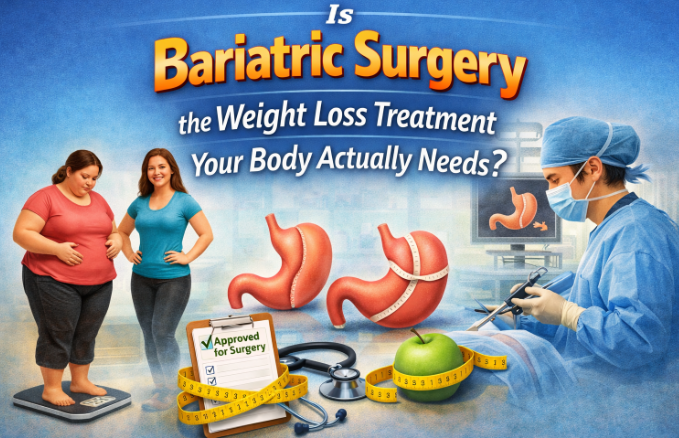
Is Bariatric Surgery the Weight Loss Treatment Your Body Actually Needs
For millions of people, obesity is a medical problem. And no amount of discipline can fully override a body that is biologically wired to hold onto weight.
There comes a point where the conventional approach stops being a solution and starts being a cycle of effort, frustration, and starting over. Recognising that point is not giving up. It is the beginning of actually getting somewhere.
This article explains why diet and exercise alone hit a wall, which weight loss treatments are genuinely worth considering, and when weight loss surgery becomes the most logical, medically sound step forward.
The Hard Truth About Obesity That Most People Get Wrong
Obesity is one of the most misunderstood conditions in the world. Most people see it as a consequence of poor choices like too much food, too little movement, and not enough self-control. But that narrative is medically inaccurate.
Obesity is a chronic, complex medical condition influenced by genetics, hormones, metabolism, mental health, and environment. When the body crosses into obesity, it actively resists weight loss by producing more hunger hormones, slowing metabolism, and conserving fat as a survival mechanism. Additionally, obesity affects your joints, your heart, your sleep, your hormones, and your ability to live fully.
Telling someone with obesity to simply eat less and move more is like telling someone with high blood pressure to just relax. Technically possible, practically insufficient.
This is the point where a different conversation needs to happen, that moves beyond lifestyle advice and toward structured, medical weight loss treatment.
Why Your Body Fights Back Every Time You Try to Lose Weight
Here is something most people never hear from their nutritionist or gym trainer — when you lose weight, your body panics.
As the weight drops, the brain registers it as a threat and triggers a series of biological responses to bring it back.
- Hunger hormones like ghrelin spike, making you feel hungrier than ever.
- The metabolism slows down to burn fewer calories.
- Fat cells shrink but never disappear, and they spend years quietly signalling the body to refill them.
This is called metabolic adaptation, and it is a documented science. It is the prime reason why the closer you get to your goal weight, the harder your own body works against you.
But when you try everything possible to lose weight but still fail, then it’s a sign to try harder. They are a signal that the approach itself needs to change. When the body has reached a point where it actively resists conventional efforts, it is communicating that it needs clinical support, not just more discipline.
Weight Loss Treatments That Actually Help
Not everybody responds to the same weight loss treatments, and that is precisely why the approach to treating obesity has evolved significantly over the years. What once began as blanket dietary advice has grown into a structured, medically supported field that recognises obesity as a condition that deserves real clinical attention.
Today, weight loss treatment spans a spectrum of interventions, each designed for a different stage, a different body, and a different level of need.
Medically Supervised Programs
For those in the early stages of intervention, medically supervised programs offer a structured, guided approach for losing weight. This could be a combination of nutrition planning, behavioural counselling, physical activity guidance, and regular health monitoring. These programs are tailored to the individual and backed by clinical oversight. They work well for those who are overweight and looking to course-correct before the condition progresses further.
Weight Loss Medications
Weight loss medications have gained significant attention in recent years, and for good reason. Certain medications do help suppress appetite, regulate blood sugar, and support modest weight loss. However, they come with an important caveat as they work best as a short-term support tool. The moment the medication stops, the weight often returns. They also carry side effects that make them unsuitable for everyone, and they are rarely effective for those dealing with severe obesity.
Weight Loss Surgery
For individuals with a high BMI or obesity-related health conditions, weight loss surgery offers something the other options simply cannot. It works at a physiological level, altering how the body processes food, regulates hunger hormones, and stores fat. The results are not just significant — they are lasting. And for many, it is the intervention that finally breaks the cycle for good.
What makes this an even more compelling time to consider surgical intervention is how far the procedure itself has evolved. Bariatric surgery today is more precise, more refined, and more accessible than ever before.
At NObesity, Ahmedabad, advanced robotic bariatric surgery is now available. It’s a minimally invasive, highly accurate approach to weight loss surgery for faster recovery and an even safer surgical experience. For those exploring their options, this is a development genuinely worth knowing about.
How Bariatric Surgery Can Change Lives
Bariatric surgery works at a level that no diet or medication can reach.
- Bariatric surgery fundamentally changes the way your body processes food, regulates hunger, and manages fat storage.
- Bariatric surgery has been shown to significantly improve or even resolve obesity-related conditions such as type 2 diabetes, high blood pressure, sleep apnea, and joint problems.
As powerful as it is, bariatric surgery is not the right fit for everyone. Candidacy depends on a range of factors, including your BMI, existing health conditions, previous weight loss attempts, and your physical and mental readiness for the journey ahead.
The only real way to know whether weight loss surgery is the right step for you is to have an honest, thorough conversation with the right expert. Consulting the best bariatric surgeon in Ahmedabad will give you a personalised, clear-eyed assessment.
The First Step Is Smaller Than You Think
Every significant change begins with a single, honest step, and when it comes to weight loss, you can start where you are.
- Swap one processed meal for a balanced one.
- Take a walk.
- Prioritise sleep.
Small, consistent shifts in daily habits build the foundation that every successful weight loss journey stands on. But alongside those lifestyle changes, checking your BMI could help. BMI, or Body Mass Index, is a simple numerical measure that uses your height and weight to indicate whether you fall in the healthy, overweight, or obese range. It is one of the most reliable starting points for understanding whether medical intervention deserves a place in your conversation.
Once you have your BMI and feel ready to explore further, the next step is a proper consultation. And that is where the real transformation begins. Under the guidance of the best bariatric surgeon, you will receive a thorough evaluation, a personalised treatment plan, and a clear roadmap tailored entirely to your health and goals.
Conclusion
Obesity is a medical condition that deserves a medical solution. The effort you have put in was never wasted. It brought you here, to a better understanding of what your body truly needs.
The right weight loss treatment exists. The right guidance is available. And the right time to take that first step is always now.