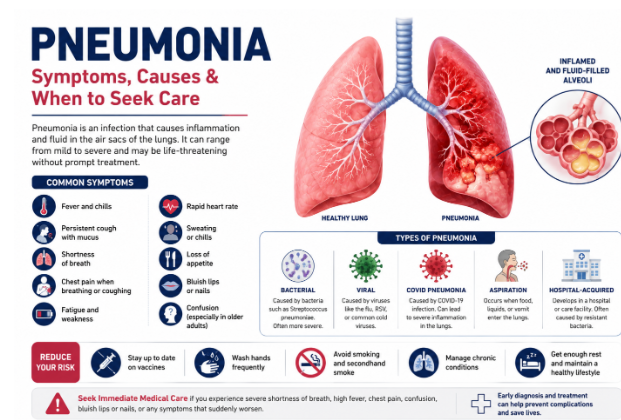
Pneumonia Symptoms: Warning Signs, Risk Factors, and When to Seek Medical Care.
A cough that won’t go away. A fever that leaves you exhausted. Shortness of breath that makes everyday tasks feel difficult.
These symptoms are often blamed on a lingering cold or seasonal flu, but sometimes they point to something more serious: pneumonia.
Pneumonia is one of the most common respiratory infections, affecting people of all ages. While many cases are treatable, severe pneumonia can lead to serious complications if medical care is delayed. Understanding the symptoms of pneumonia, the warning signs to watch for, and the factors that increase your risk can help you seek treatment before the condition becomes more serious.
What Is Pneumonia?
Pneumonia is an infection that causes inflammation in the lungs. The tiny air sacs inside the lungs, called alveoli, can fill with fluid or pus, making it harder for oxygen to move into the bloodstream.
When this happens, people may experience coughing, fever, chest discomfort, fatigue, and breathing difficulties.
Pneumonia can affect one lung or both lungs and may range from mild illness to a life-threatening condition requiring hospitalization.
Common Pneumonia Symptoms
Pneumonia symptoms can vary depending on the cause of the infection, a person’s age, and overall health.
Some of the most common symptoms include:
- Persistent cough
- Cough producing mucus or phlegm
- Fever and chills
- Shortness of breath
- Chest pain during breathing or coughing
- Fatigue and weakness
- Rapid breathing
- Sweating
- Loss of appetite
- Rapid heart rate
Some people develop symptoms gradually, while others become sick very quickly.
Signs of Pneumonia in Adults
Pneumonia in adults often causes symptoms that interfere with daily activities. Many adults report feeling unusually tired and short of breath, even during simple tasks such as walking or climbing stairs.
Common signs of pneumonia in adults include:
- Ongoing cough lasting several days
- Fever that does not improve
- Difficulty taking deep breaths
- Wheezing or noisy breathing
- Chest discomfort
- Reduced energy levels
- Increased mucus production
Older adults may experience confusion, dizziness, or sudden changes in mental alertness rather than classic respiratory symptoms.
How Do You Know If You Have Pneumonia?
One of the most common questions people ask is, “How do you know if you have pneumonia instead of a cold or the flu?”
Although symptoms can overlap, pneumonia often causes:
- Persistent fever
- Worsening cough
- Thick mucus production
- Shortness of breath
- Chest pain
- Extreme fatigue
If respiratory symptoms continue to worsen rather than improve after several days, it is important to seek medical evaluation.
Types of Pneumonia
Pneumonia is not a single disease. It can develop from different types of infections.
Bacterial Pneumonia
Bacterial pneumonia is one of the most common forms of pneumonia in adults. Symptoms often appear suddenly and may include:
- High fever
- Chills
- Productive cough
- Chest pain
- Significant fatigue
Because bacteria are responsible for the infection, antibiotics are commonly used as treatment.
Viral Pneumonia
Viruses that cause colds, influenza, RSV, and other respiratory infections can also lead to pneumonia.
Symptoms may begin gradually and often include:
- Dry cough
- Body aches
- Headache
- Fever
- Shortness of breath
COVID Pneumonia
COVID pneumonia became widely recognized during the pandemic because it can cause extensive inflammation within the lungs.
People with COVID pneumonia may experience:
- Persistent cough
- Fever
- Low oxygen levels
- Difficulty breathing
- Severe fatigue
Some individuals may feel relatively comfortable despite having dangerously low oxygen levels, making prompt medical evaluation especially important.
Post-COVID Pneumonia
Even after recovering from COVID-19, some people continue to experience lingering lung inflammation and respiratory symptoms.
Pneumonia after COVID may cause:
- Persistent cough
- Ongoing shortness of breath
- Chest tightness
- Reduced exercise tolerance
- Fatigue lasting weeks or months
A pulmonary evaluation can help determine whether ongoing symptoms are related to post-COVID pneumonia or another lung condition.
Pneumonia Risk Factors
Although anyone can develop pneumonia, certain factors increase the likelihood of infection.
Common pneumonia risk factors include:
- Age over 65
- Children under 2 years old
- Smoking
- Asthma
- COPD
- Pulmonary fibrosis
- Heart disease
- Diabetes
- Pregnancy
- Weakened immune system
- Long-term hospitalization
- Residence in nursing homes or assisted living facilities
Understanding these risk factors can help individuals take preventive steps and seek care early when symptoms appear.
Warning Signs of Severe Pneumonia
While many cases improve with treatment, severe pneumonia symptoms should never be ignored.
Warning signs of pneumonia include:
- Severe shortness of breath
- Rapid breathing
- Bluish lips or fingertips
- Persistent high fever
- New confusion
- Difficulty staying awake
- Severe chest pain
- Low oxygen levels
These symptoms may indicate that the infection is affecting oxygen delivery throughout the body and requires immediate medical attention.
Possible Complications of Pneumonia
Without prompt treatment, pneumonia can lead to serious health complications.
Potential complications include:
- Fluid buildup around the lungs
- Lung abscesses
- Bloodstream infections
- Sepsis
- Respiratory failure
- Acute respiratory distress syndrome (ARDS)
The risk of complications is highest among older adults, smokers, and individuals with chronic medical conditions.
How Is Pneumonia Diagnosed?
Healthcare providers use several tools to diagnose pneumonia and determine its severity.
Diagnostic testing may include:
- Physical examination
- Chest X-ray
- CT scan of the chest
- Blood tests
- Pulse oximetry
- Sputum testing
- Bronchoscopy in selected cases
Early diagnosis often leads to faster treatment and better outcomes.
Preventing Pneumonia
Although not every case can be prevented, there are several ways to reduce your risk:
- Stay up to date on recommended vaccinations
- Practice good hand hygiene
- Avoid smoking and secondhand smoke
- Manage chronic health conditions
- Get adequate rest
- Maintain a healthy immune system
- Seek treatment for respiratory infections before they worsen
Preventive measures are particularly important for older adults and individuals with chronic lung disease.
When to See a Lung Specialist
If you have persistent respiratory symptoms, worsening shortness of breath, or concerns about pneumonia after COVID, seeking professional medical care is important.
Early evaluation can help identify the cause of symptoms, confirm a diagnosis, and prevent complications from developing.
If respiratory symptoms persist or worsen, seeking an evaluation from a pulmonary specialist can help identify the underlying cause and determine the most appropriate treatment plan. Patients looking for more information about specialized pneumonia treatment (Pneumonia Diagnosis & Treatment for Plano, TX | Lung Sleep Health Center | Pulmonologist, Critical Care & Sleep Medicine Specialists) can explore additional resources and care options.
Maintaining healthy respiratory habits and prioritizing long-term lung health (Lung Health Clinical Evaluation in Plano, TX | Pulmonologist, Critical Care & Sleep Medicine Specialists | Lung & Sleep Health Center) can help reduce the risk of future respiratory infections and complications.
Final Thoughts
Pneumonia is more than just a bad respiratory infection. It can significantly affect breathing, energy levels, and overall health. Recognizing pneumonia symptoms, understanding pneumonia risk factors, and knowing the warning signs of severe pneumonia can help you take action before complications occur.
Whether you’re concerned about bacterial pneumonia, COVID pneumonia, or pneumonia after COVID, early diagnosis and proper medical care remain the best tools for protecting your lungs and supporting a full recovery.